I have some sympathy for the idea of political correctness. At its heart lies a message of kindness to your fellow man (or woman). Be nice to each other or else people will frown and you’ll find it slightly embarrassing. It has, of course, become de rigueur to take the piss out of political correctness as it is usually uttered with its standard suffix: ‘gone mad’. Even this in itself might be considered not politically correct, after all it could be offensive to those who really have gone mad (I mean, those who are suffering some from a mental illness).
These faintly amusing jokes can go on for ever, and they frequently do. Still, many people’s daily lives are blighted by a little too much political correctness, and many of us automatically correct for it as a matter of course. Still there’s good news, there’s one last bastion of our mental lives still holding up against the onslaught of PCness: our dreams.
Research from the University of Mannheim reports we are still resolutely non-PC in the things that we tend to dream about. Men like to dream about other men, violence, sex, cars and weapons while women dream about food, clothing and personal appearance.
Enjoy it while you can though because it’s probably only a matter of time before some sort of smart drug is introduced to ensure an equal opportunities policy while you sleep.




 Just a small point. You may be aware that there is some connection between relative
 Most of us like to think that we have chosen our occupations, rather than them choosing us. We have reasons for what we are doing, visions of where we want to get to. We have career planning, career goals – the feeling of control.
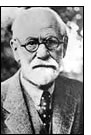 You can listen online to a five part series on Radio 4 that examines four of Freud’s works 100 years after they were first published. Each programme is only 15 minutes, but if you have to choose only two, then go for the first, ‘Sexual Aberrations’ and the last, ‘Wit and its Relation to the Unconscious’.
 Dr Petra Boynton (left), the sex and relationship psychologist, provides some useful criticism of self-help books in response to an article in the
 When asked to estimate a three minute period of time, 20 year olds are significantly more accurate than the middle aged or elderly. Why? It seems that the elderly experience time more quickly than the young. Remember when you were a child and the summer holidays seemed to last forever? Perhaps as you get older, the reverse is true and the summer passes in what seems like a single month.

 I need your help with some nominations for the most unusual research in psychology.
 Fad diets are now so numerous that when the latest is introduced, the media must whack the scepticism up to maximum to have any hope of people reading past the first sentence.