
What Is MCI And Why Do 99% Of Physicians Underdiagnose It? (M)
MCI is typically diagnosed when people have age-related problems with memory and thinking, but can still live independently.
Evidence for a major cause of dementia confirmed.
People with a higher body-mass index are more likely to develop dementia, research finds.
Being classed as overweight rather than in the normal range increases the dementia risk by 16-33%.
For a person who is 170cm (5’7″), for example, carrying an extra 14.5kg (32lbs) over the ideal weight, will increase their dementia risk between 16 and 33%.
Being classed as obese (an additional 14.5kg) adds the same amount of dementia risk again, making a total of up to 66%.
The study analysed data from 1.3 million adults in the US and Europe.
Professor Mika Kivimäki, the study’s first author, said:
“The BMI-dementia association observed in longitudinal population studies, such as ours, is actually attributable to two processes.
One is an adverse effect of excess body fat on dementia risk.
The other is weight loss due to pre-clinical dementia.
For this reason, people who develop dementia may have a higher-than-average body mass index some 20 years before dementia onset, but close to overt dementia have a lower BMI than those who remain healthy.
The new study confirms both the adverse effect of obesity as well as weight loss caused by metabolic changes during the pre-dementia stage.”
Previous studies have given conflicting messages about the effect of obesity on dementia.
Some have suggested more weight may have a protective effect, others, like this one, the reverse.
The study was published in the journal Alzheimer’s & Dementia (Kivimäki et al., 2017).
Adhering to this diet could not only lower the risk of heart disease but also boost cognitive function.
Heart healthy diets designed to lower blood pressure can also improve memory and thinking in later life.
According to a study, middle-aged women who adopt a blood pressure lowering diet are 17 percent less likely to experience signs of cognitive decline such as memory loss, poor thinking and reasoning years later.
Adhering to a healthy eating style such as the Dietary Approaches to Stop Hypertension diet (DASH) not only lowers the risk of heart disease but also can boost cognitive function.
The study focused on women as over two-thirds of people with Alzheimer’s disease are female.
Alzheimer’s is the most common type of dementia, which gradually ruins memory and thinking skills.
It is estimated that nearly 7 million Americans age 65 and older are living with Alzheimer’s disease, and the figure is likely to double by 2060.
Professor Yu Chen, the study’s senior author, said:
“Subjective complaints about daily cognitive performance are early predictors of more serious neurocognitive disorders such as Alzheimer’s.
With more than 30 years follow-up, we found that the stronger the adherence to a DASH diet in midlife, the less likely women are to report cognitive issues much later in life.”
The DASH diet plan involves eating lots of fruit, vegetables and whole grains and also includes fish, poultry, non-fat or low fat dairy, nuts, seeds, legumes, and vegetable oils.
It also encourages eating foods that are high in magnesium, calcium, and potassium but limits foods that are high in cholesterol, saturated fat, sugar, salt, and sodium.
The diet is mainly designed to combat high blood pressure and so the risk of heart disease but it also improves cognitive function.
Hypertension in middle-age is also a risk factor for vascular cognitive impairment, a condition that damages the brain’s blood vessels, leading to cognitive decline, Alzheimer’s disease and other types of dementia.
The study enrolled 5,116 women with a 30-year follow up.
They assessed participants’ levels of cognitive impairment, which can potentially lead to dementia in later life.
Typical cognitive issues include forgetting recent events or conversations or failing to navigate familiar roads, or remember shopping lists.
The results showed that women who consumed the DASH diet were 17 percent less likely to have such cognitive problems.
Ms Yixiao Song, the study’s first author, said:
“Our data suggest that it is important to start a healthy diet in midlife to prevent cognitive impairment in older age.”
Dr Fen Wu, study co-author, said:
“Following the DASH diet may not only prevent high blood pressure, but also cognitive issues.”
The study was published in the journal Alzheimer’s & Dementia (Song et al., 2023).
Healthy adults who had the treatment displayed improved memory and the researchers are now going on to test the technique on patients with Alzheimer’s.
In one-third of Parkinson’s patients these hallucinations manifest themselves before the characteristic trembling.
Experiencing minor hallucinations, such as feeling someone is nearby when there is no one there, could be an early sign of Parkinson’s disease, a study finds.
Known as ‘presence hallucinations’, they are also occasionally felt by healthy people, but can be an early indicator of neurological dysfunction.
In Parkinson’s disease — which is chiefly known for producing tremors — hallucinations like these can predict more rapid cognitive decline and tend to appear early on.
Other minor hallucinations sometimes experienced by those with Parkinson’s include passage hallucinations, which consist of a fleeting glance of someone or something passing sideways and other visual hallucinations, such as mistaking a table for a dog.
Parkinson’s is often diagnosed too late — early interventions can help to slow the progression of the disease, so minor hallucinations could be a useful warning sign.
Professor Olaf Blanke, study co-author, said:
“We now know that early hallucinations are to be taken seriously in Parkinson’s disease.
If you have Parkinson’s disease and experience hallucinations, even minor ones, then you should share this information with your doctor as soon as possible.
So far, we only have evidence linking cognitive decline and early hallucinations for Parkinson’s disease, but it could also be valid for other neurodegenerative diseases.”
The study included 75 people, aged between 60 and 70 who had Parkinson’s disease.
The results showed that those with early hallucinations were more likely to display cognitive decline in executive function — the ability to plan and control behaviour.
Regular hallucinations are experienced by half of Parkinson’s patients, despite being a little-known symptom.
In one-third of patients hallucinations manifest themselves before the characteristic trembling.
Professor Blanke said:
“Detecting the earliest signs of dementia means early management of the disease, allowing us to develop improved and personalized therapies that try to modify the course of the disease and improve cognitive function.”
While presence hallucinations can be relatively minor at first, they may progress to more complex visual hallucinations later on.
Professor Blanke said:
“We aim to have an early marker to identify individuals at risk of a more severe form of Parkinson’s disease, characterized by a more rapid cognitive decline and dementia, based on hallucinations proneness.
And ideally identify those individuals even before hallucinations actually occur.
We are therefore developing neurotechnology methods and procedures for that purpose.”
The study was published in the journal Nature Mental Health (Bernasconi et al., 2023).
Inadequate daily intake of this vitamin-like compound can lead to an enlarged heart, liver damage, weight gain as well as Alzheimer’s disease.
A deficiency in choline is linked to increased Alzheimer’s risk, research finds.
Choline is a vitamin-like essential nutrient produced in the liver, however, the amounts produced are too small for the body’s requirements.
Lecithin (a fatty substance) is the main source of choline found in egg yolk, beef, fish, chicken, wheat germ, soy beans, dairy products, peanuts, and almonds.
Choline is well known for its effect in treating memory disorders such as Alzheimer’s disease and dementia.
According to the US Institute of Medicine the minimum daily intake of choline for men is 550mg and 425mg for women.
Pregnant and breastfeeding women require at least 450mg and 550mg choline per day respectively, due to the crucial role of this nutrient in infant development.
Despite these daily requirements, national dietary surveys have found that less than 10 percent of Americans are meeting the recommendations.
Choline is not only essential for brain health but also influences liver function as shortfalls in this nutrient can cause cell damage and irregularities in fat metabolism.
A study has examined how choline deficiency can adversely influence the brain, liver, and heart.
The research team found that dietary choline deficiency in mice led to weight gain, reduced glucose metabolism, enlargement of the heart, neurological alterations, and liver damage.
Choline deficiency also led to elevated levels of tau tangles and beta-amyloid plaques, two key features of Alzheimer’s disease.
Amyloid plaques are clustered proteins between the nerve cells and tau tangles are abnormal accumulations of tau proteins inside neurons.
Dr Ramon Velazquez, the study’s senior author, pointed out that choline deficiency in human contains two aspects:
“it’s a twofold problem.
First, people don’t reach the adequate daily intake of choline established by the Institute of Medicine in 1998.
And secondly, there is vast literature showing that the recommended daily intake amounts are not optimal for brain-related functions.”
The study shows a link between choline deficiency and a group of neurological and physical changes.
Adequate levels of choline, on the other hand, will improve overall health and protect the nervous system.
For example, elevated levels of homocysteine have been found to to be neurotoxic and associated with neurodegenerative diseases but choline can reduce homocysteine levels.
Another example is that acetylcholine a neurotransmitter synthesized from choline which is vital for cognitive functions including learning, memory, and attention.
These findings support other studies concerning the influence of dietary choline on human health.
The evidence may help people, particularly vegans and those on plant-based diets, to eat foods rich in choline.
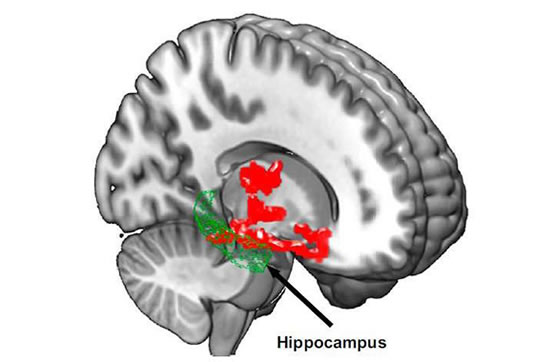
The authors also explored proteins in the hippocampus, one of the brain areas wracked by Alzheimer’s.
Inadequate choline status appeared to affect hippocampal networks associated with postsynaptic membrane regulation and microtubule function — the two are vital for functions of the brain.
In addition, blood plasma samples revealed that choline deficiency caused alterations in certain proteins produced in the liver which are important for metabolic function.
Dr Velazquez said:
“Our work provides further support that dietary choline should be consumed on a daily basis given the need throughout the body.”
The study was published in the journal Aging Cell (Dave et al., 2023).
Any variety may well have the beneficial effect as they all contain an antioxidant called ergothioneine.
Two portions of mushrooms a week halves the risk of memory loss, research finds.
Mild cognitive impairment, as it is known, is frequently a precursor to dementia.
It involves forgetfulness, along with problems with language and attention.
However, the problems are normally subtle — certainly more so than dementia.
Older people eating around half a plate of mushrooms per week, though, were at half the risk of developing the condition.
Even one small portion of mushrooms a week may be enough to have a meaningful effect, the scientists think.
Dr Lei Feng, the study’s first author, said:
“This correlation is surprising and encouraging.
It seems that a commonly available single ingredient could have a dramatic effect on cognitive decline.”
The study involved over 600 people over 60-years-old in Singapore who were followed over six years.
They were tested for mild cognitive impairment (MCI) along with being asked about their dietary habits.
Dr Feng said:
“People with MCI are still able to carry out their normal daily activities.
So, what we had to determine in this study is whether these seniors had poorer performance on standard neuropsychologist tests than other people of the same age and education background.”
The study found that six commonly eaten mushrooms were linked to a 50 percent lower risk of cognitive decline.
These were:
However, any variety of mushrooms may well have the beneficial effect as they all contain an antioxidant called ergothioneine.
Dr Irwin Cheah, study co-author, explained:
“We’re very interested in a compound called ergothioneine (ET).
ET is a unique antioxidant and anti-inflammatory which humans are unable to synthesise on their own.
But it can be obtained from dietary sources, one of the main ones being mushrooms.”
The researchers will now conduct a randomised controlled trial of a pure compound of ET.
The study was published in the Journal of Alzheimer’s Disease (Feng et al., 2019).
The damage done by this risk factor was particularly striking for early-onset dementia: that which occurs before 65-years-old.
Alcohol is the biggest avoidable risk factor for dementia, according to research.
The conclusions come from over 1 million people diagnosed with dementia in France.
The damage done by alcohol was particularly striking for early-onset dementia: that which occurs before 65-years-old.
Of the 57,000 cases of early-onset dementia in the sample, 57% were related to chronic heavy drinking.
Heavy drinkers are defined as those consuming an average of 4-5 standard US drinks per day for a man, or 3 standard US drinks for a woman.
This is like drinking close to a bottle of wine per day for a man or over half a bottle per day for a woman.
While this study only looked at heavy drinking, others have suggested moderate alcohol intake also carries risk for the brain.
Dr Jürgen Rehm, study co-author, said:
“The findings indicate that heavy drinking and alcohol use disorders are the most important risk factors for dementia, and especially important for those types of dementia which start before age 65, and which lead to premature deaths.
Alcohol-induced brain damage and dementia are preventable, and known-effective preventive and policy measures can make a dent into premature dementia deaths.”
Alcohol use disorders are thought to shorten life by an average of 20 years.
The link between heavy drinking and alcohol may be even stronger than this study reveals as only the most severe cases were included in this study.
Dr Bruce Pollock, study co-author, said:
“As a geriatric psychiatrist, I frequently see the effects of alcohol use disorder on dementia, when unfortunately alcohol treatment interventions may be too late to improve cognition.
Screening for and reduction of problem drinking, and treatment for alcohol use disorders need to start much earlier in primary care.”
The study was published in the journal The Lancet Public Health (Schwarzinger et al., 2018).
The simple belief about old age that halves your dementia risk.
Having a positive attitude towards ageing can half the risk of developing dementia, research finds.
People with the strongest genetic risk factor for depression — the ε4 variant of the APOE gene — were 49.8 percent less likely to develop the disease compared to those with a negative view of ageing.
For those without the genetic risk factor, those with positive beliefs about ageing had a 43.6 percent lower chance of developing dementia.
Professor Becca Levy, the study’s first author, said:
“We found that positive age beliefs can reduce the risk of one of the most established genetic risk factors of dementia.
This makes a case for implementing a public health campaign against ageism, which is a source of negative age beliefs.”
The study followed 4,765 people with an average age of 72 over four years — none of them had dementia at the start of the study.
All were asked about their attitudes towards ageing.
For example, they were asked how much they agreed with statements like “The older I get, the more useless I feel”.
Among those testing positive for high genetic risk, 6.1% with more negative attitudes towards ageing developed dementia.
In comparison, only 2.7 percent of people with a positive attitude towards ageing developed dementia.
Research has shown that people’s attitudes towards ageing can be changed, the authors write:
“Short- and long-term randomized controlled interventions conducted with older participants have shown that positive age beliefs can be bolstered and negative age beliefs can be mitigated with corresponding changes in cognitive and physical performance.”
Thinking positively about ageing may help to reduce the built up of damaging proteins in the brain linked to dementia.
The study’s authors write:
“The positive age beliefs of older individuals appear to provide a means of coping with exposure to ageism which is prevalent in society.
It has been shown that older participants in a positive-age-belief intervention interpreted their environment in a more age-friendly way.
The reduction of stress by positive age beliefs could potentially contribute to a lower incidence of dementia among older individuals in general and specifically among those with APOE ε4.”
The study was published in the journal PLoS One (Levy et al., 2018).
The antioxidants are found in abundance in certain types of plants.
Join the free PsyBlog mailing list. No spam, ever.